Sewer Line Leak Detection in Union, NJ
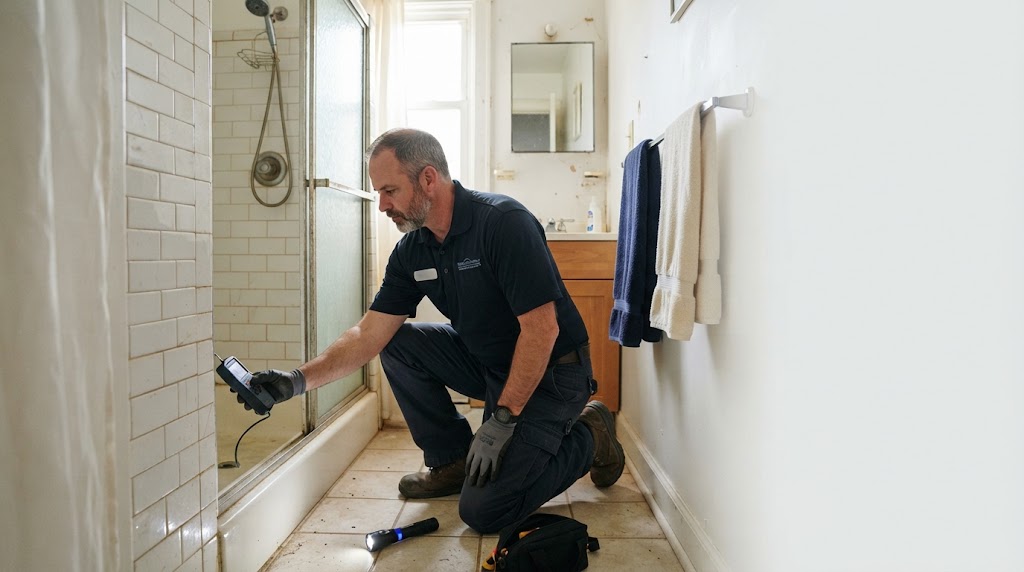
While a supply line leak creates immediate, pressurized damage, a sewer line leak is often insidious. Waste lines operate on gravity, not pressure, meaning a cracked pipe might weep raw sewage or wastewater into the surrounding soil or building structure for months before the issue becomes undeniable. In older Union properties, addressing these failures quickly is essential to protect both structural integrity and indoor air quality.
Because the main sewer lateral runs beneath the basement floor and deep under the front yard out to the municipal connection, identifying the exact point of failure is impossible without specialized technology. Our sewer line leak detection Union NJ service uses high-definition camera inspection and advanced testing to map the internal condition of your drain system and pinpoint the breach before any unnecessary excavation occurs.
Warning Signs of a Sewer Line Leak
Sewer failures often masquerade as general moisture problems or simple clogs. However, certain symptoms strongly indicate a structural breach in the pipe:
- Persistent Odors: The distinct, unpleasant smell of sewer gas in your basement, yard, or near ground-level drains. This occurs when a cracked pipe allows gasses to escape instead of venting through the roof.
- Unexplained Wet Spots: Puddles of foul-smelling water forming in your yard, particularly over the path of the sewer lateral, even during dry spells.
- Foundation Staining: Dark stains or excessive moisture weeping through the lower sections of your basement walls, especially near where the main drain exits the home.
- Frequent Backups: If a pipe has collapsed or shifted due to a leak, it will repeatedly snag debris, leading to recurring blockages that a standard drain snake cannot permanently fix.
The Vulnerability of Older Pipes
Many homes in neighborhoods like Connecticut Farms or Putnam Manor were constructed using cast iron or clay sewer laterals. Over decades, cast iron severely corrodes, thinning out at the bottom of the pipe until a trench forms, allowing wastewater to escape directly into the soil. Clay pipes are highly susceptible to root intrusion; tree roots seek out the moisture leaking from minor joint separations, eventually growing into the pipe and shattering it under pressure.
Diagnostic Camera Inspection
We do not guess where the pipe is broken. We deploy specialized fiber-optic sewer cameras directly into the line. This allows us to visually inspect the interior condition of the pipe in real-time, identifying cracks, bellied sections, root masses, or complete collapses. The camera head features a built-in sonde (a transmitting beacon). Once we locate the defect on the screen, we use a surface receiver to track the beacon above ground, marking the exact depth and location of the problem.
If the leak is causing severe odor but the visual inspection is inconclusive (which can happen with tiny hairline fractures or failed vent stacks hidden in walls), we may utilize non-toxic smoke testing. By introducing smoke into the drainage system, we can observe exactly where it escapes, pinpointing the breach.
Once the failure is located, we can discuss appropriate solutions, ranging from targeted excavation to trenchless lining techniques, depending on the severity and location of the damage.
Suspect a Broken Sewer Line?
Don't let raw sewage silently undermine your foundation or yard. Let us perform a camera inspection to assess the exact condition of your sewer lateral.
Schedule Camera Inspection: (201) 510-1615