Shower & Bathroom Leak Detection in Union, NJ
Bathrooms are the most heavily plumbed areas of any home, combining pressurized supply lines, gravity-fed drainage systems, and complex waterproof membranes into a very tight space. When water begins dripping through the ceiling directly below a second-floor bathroom, determining the exact point of failure is challenging. A brown stain on a kitchen ceiling does not automatically mean the shower pipe is broken—it could be a failing tile joint or a degraded toilet seal.
Our shower leak detection Union NJ service focuses on distinguishing surface water intrusion from concealed plumbing failures. We systematically test the various systems within your bathroom to identify the exact cause of the moisture before any costly tile or tub enclosures are unnecessarily destroyed.
Common Bathroom Leak Sources
Because bathrooms involve both running water and standing water, the points of failure can be structural or mechanical. We frequently investigate:
Shower Pan and Enclosure Failures
Custom tiled showers rely on a waterproof membrane (the shower pan) installed beneath the floor tile. If this pan tears, or if the curb is improperly flashed, water will steadily wick into the surrounding wood framing every time someone bathes. Additionally, failed caulk lines, porous grout, or loose escutcheon plates around the shower arm can allow surface water to bypass the tile and enter the wall cavity.
Valve and Supply Line Leaks
The shower mixing valve is hidden entirely behind the wall. If a soldered connection loosens or the valve body cracks, water will spray inside the wall cavity, often only when the shower is turned on. Similarly, braided supply lines feeding the bathroom sink or toilet can develop slow, hidden drips at the connection points.
Toilet Wax Rings and Drain Connections
If a toilet rocks even slightly when sat upon, the wax ring sealing the fixture to the floor flange has likely failed. This allows wastewater to seep into the subfloor with every flush. Tub drains and overflow gaskets are also notorious for degrading over time, allowing water to escape before it reaches the main branch drain.
Our Diagnostic Approach
We do not guess based on the location of a ceiling stain, as water often travels along floor joists before dropping down. Our testing process is methodical:
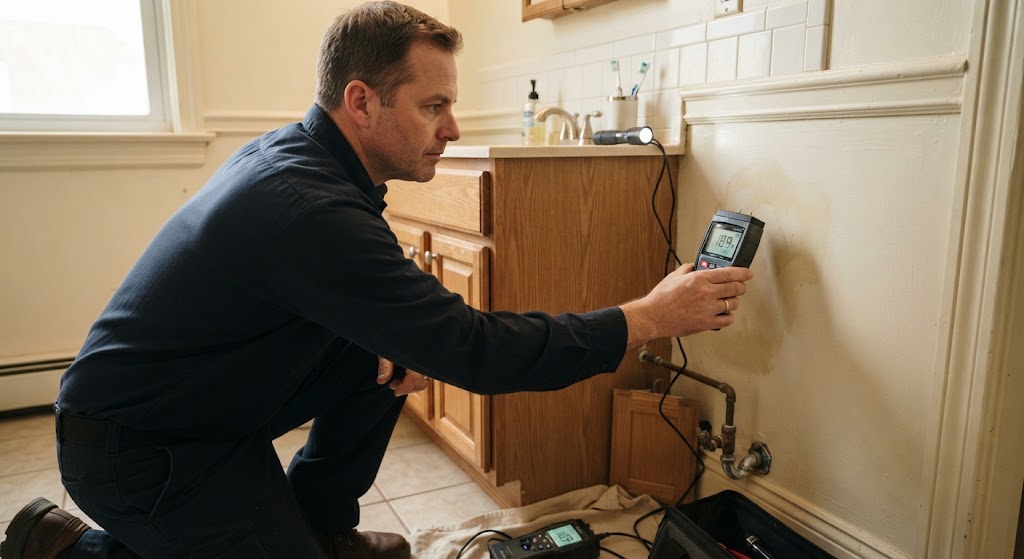
- Moisture Mapping: Using advanced moisture meters, we map the extent of the water saturation in the adjacent walls, flooring, and ceiling below.
- Thermal Imaging: We utilize infrared cameras to observe temperature differentials behind the tile or drywall, often identifying the exact path the water is taking.
- Targeted Testing: We isolate different systems. For example, we may plug the shower drain and fill the base to test the integrity of the shower pan without engaging the pressurized supply lines. If the leak appears, the issue is the pan. If not, we test the valve and supply connections.
Water Stains Below Your Bathroom?
Don't tear out your tile looking for a leak. Let us perform a targeted diagnosis to find the exact source of the water intrusion.
Call a Specialist: (201) 510-1615